Rollers, in general, are cylindrical devices that can rotate around an axis. They are used in various industries for applications such as conveying, printing, laminating, and more. Rubber rollers, specifically, are rollers that have a rubber covering or coating on their surface, which provides desirable properties like traction, elasticity, and resistance to wear and tear, making them suitable for tasks such as material handling, printing presses, and other specialized applications. Read More…
Harwood Rubber Products provides top quality rubber rollers and a variety of custom products. We are capable of producing a great diversity of rolls and coverings for a broad customer base.

Since 1948, REDCO Rubber Engineering & Development has been manufacturing rubber rollers, idler rolls and conveyor rollers. We serve industries such as computers, printers and paper handling.

Our guide rollers are made from the highest quality materials in the industry. We take pride in adhering to our company values, like integrity and honesty. As a family owned and operated company, we like to treat customers like our own family. We will always look for the best prices and the prefect solution. Give us a call today to see how we can help you meet your goals!

TPC, Inc. is a dedicated and trusted manufacturer of rollers. We manufacture rollers in all shapes, sizes, designs, and colors to meet the needs of our customers and keep their process moving. Our team of experts is dedicated to the production and innovation of our products. As a result, TPC, Inc.’s custom-fit solutions are perfected for customers of all industries.

Since 1979, Uniflex has been a leading manufacturer of urethane products. We provide high-quality urethane rollers and urethane castings, as well as urethane molded products available in an array of colors. Uniflex offers customized body blocks and engine components for the automotive industry. Our team is dedicated to advancing our company and raising industry standards.


More Roller Manufacturers
Applications
Rubber rollers are essential industrial components used across diverse sectors, valued for their versatile properties, durability, and adaptability. In the printing industry, for example, rubber rollers are crucial for transferring ink from plates to substrates, ensuring uniform print quality and seamless paper feeding. Their precision and consistency directly impact the final output, making them indispensable for high-speed offset printing, digital presses, and flexographic printers.
Beyond printing, rubber rollers are prominent in conveyor systems, where they facilitate the smooth transportation and handling of materials in manufacturing, packaging, warehousing, and logistics settings. Whether moving bulk goods in food processing plants or delicate electronics in assembly lines, their shock-absorbing and non-marring properties help reduce damage and increase throughput efficiency.
In laminating and coating machines, rubber rollers exert uniform pressure to bond layers and achieve consistent coating on materials such as paper, plastic films, textiles, and metal sheets. This is vital for industries producing labels, flexible packaging, and specialty films. The versatility of rubber rollers also extends to textile manufacturing, where they play a pivotal role in safeguarding delicate fabrics during dyeing, printing, and finishing processes by providing the right balance of grip and gentleness.
Additional applications include:
- Calendering in the paper industry — Rubber rollers are essential for calendering processes, which enhance the surface of paper for improved printability and quality, giving products a premium feel and look.
- Industrial machinery — As critical industrial components, rubber rollers provide traction, shock absorption, and vibration dampening in heavy-duty equipment used for printing, metalworking, and food processing.
- Print finishing equipment — In print finishing, rubber rollers are used in laminators, varnishing machines, and foiling presses to apply protective layers and impart a final polish to printed materials.
- Embossing and engraving machines — Rubber rollers enable the crafting of intricate patterns and designs on substrates such as paper, leather, and metals, supporting luxury packaging and decorative industries.
- Automotive manufacturing — Used in stamping, painting, and finishing lines to ensure precision and minimize defects.
The versatility, durability, and excellent traction of rubber rollers make them indispensable in these and many other industrial applications. By boosting efficiency and elevating quality standards, these components are foundational to modern manufacturing and processing environments.
The History of Rubber Rollers
Before the advent of rubber technology, rollers were traditionally fashioned from materials such as wood and metal. However, these legacy materials were limited in their flexibility and resistance to environmental factors. The introduction of vulcanized rubber—pioneered by Charles Goodyear in 1840—transformed the roller manufacturing landscape. Goodyear’s breakthrough involved enhancing natural rubber’s properties by adding sulfur and heating the mixture, making it weather-resistant, chemical-resistant, water-resistant, and elastic.
Rubber Roller – Harwood Rubber Products, Inc.
Following this innovation, engineers during the Industrial Revolution began experimenting with new roller designs. By adding soft or hard rubber to a solid steel shaft, they could perform material nipping (pinching or squeezing) tasks that were not feasible with steel alone. This marked the birth of the modern rubber roller, opening the door for new industrial applications that required enhanced grip, resilience, and versatility.
Since their invention, rubber rollers have been rapidly adopted across industries. For instance, starting in the 1920s, publishers embraced rubber rollers to apply adhesive and ink onto printing plates, achieving higher-quality, more consistent output than was previously possible.
Today, both the materials and applications of rubber rollers have grown exponentially. With the evolution of elastomeric technology, modern rollers feature advanced compounds tailored for specific environments, from food-safe coverings in pharmaceutical production to heat-resistant rollers in high-speed printing presses.
Design
Production Process
- Rubber Fabrication
Manufacturing rubber rollers begins with rubber fabrication, a process that can involve plying, extrusion, casting, or die pressing. The chosen method depends on the intended application, required roller properties, and production volume.
Plying involves the calendering process, where rubber is passed between rollers to create calendered rubber sheeting. This smooths and flattens the rubber, allowing manufacturers to layer multiple polymers for specific performance characteristics such as improved abrasion resistance or flexibility. The resulting sheet is wrapped around a metal core, typically iron or steel, and may be polished, glazed, or embossed to suit client needs.
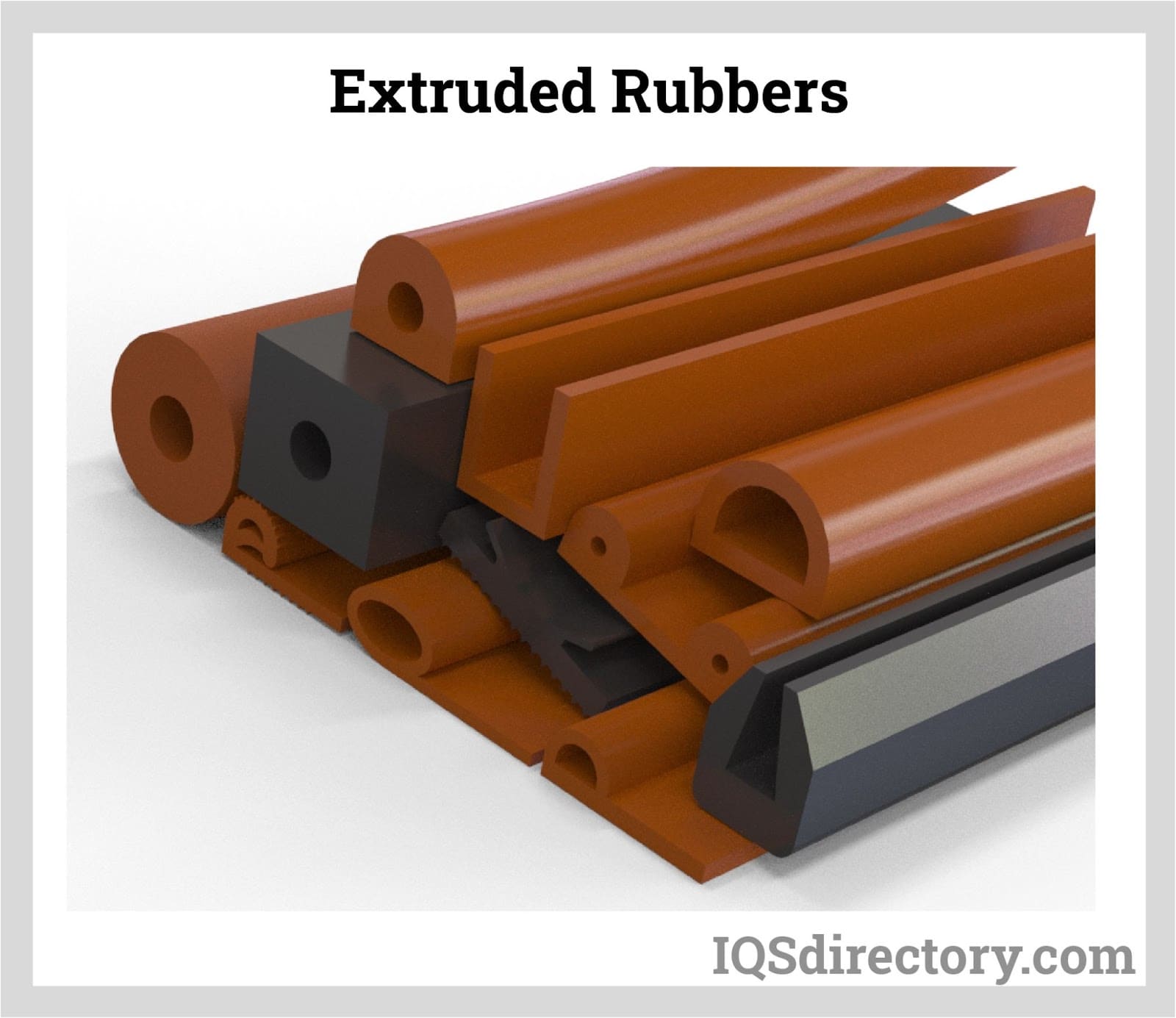
Extrusion is the predominant manufacturing technique for producing continuous rubber profiles with consistent cross-sectional shapes. Here, raw rubber is heated and forced through a die, then cured in a controlled environment to impart structural integrity and eliminate porosity. Extruded rubber rollers are ideal for large-scale, high-precision production runs where consistency is critical.
Casting remains a time-honored method for shaping complex or specialty rollers. The process involves pouring raw rubber into a mold and curing it in an oven, enabling precise control over dimensions and surface finishes.
Die press rubber fabrication uses a hydraulic press and a die to mold raw rubber under heat and pressure. Although this method is less efficient for high-volume production, it excels in producing custom-shaped rollers and prototypes.
- Roller Manufacturing
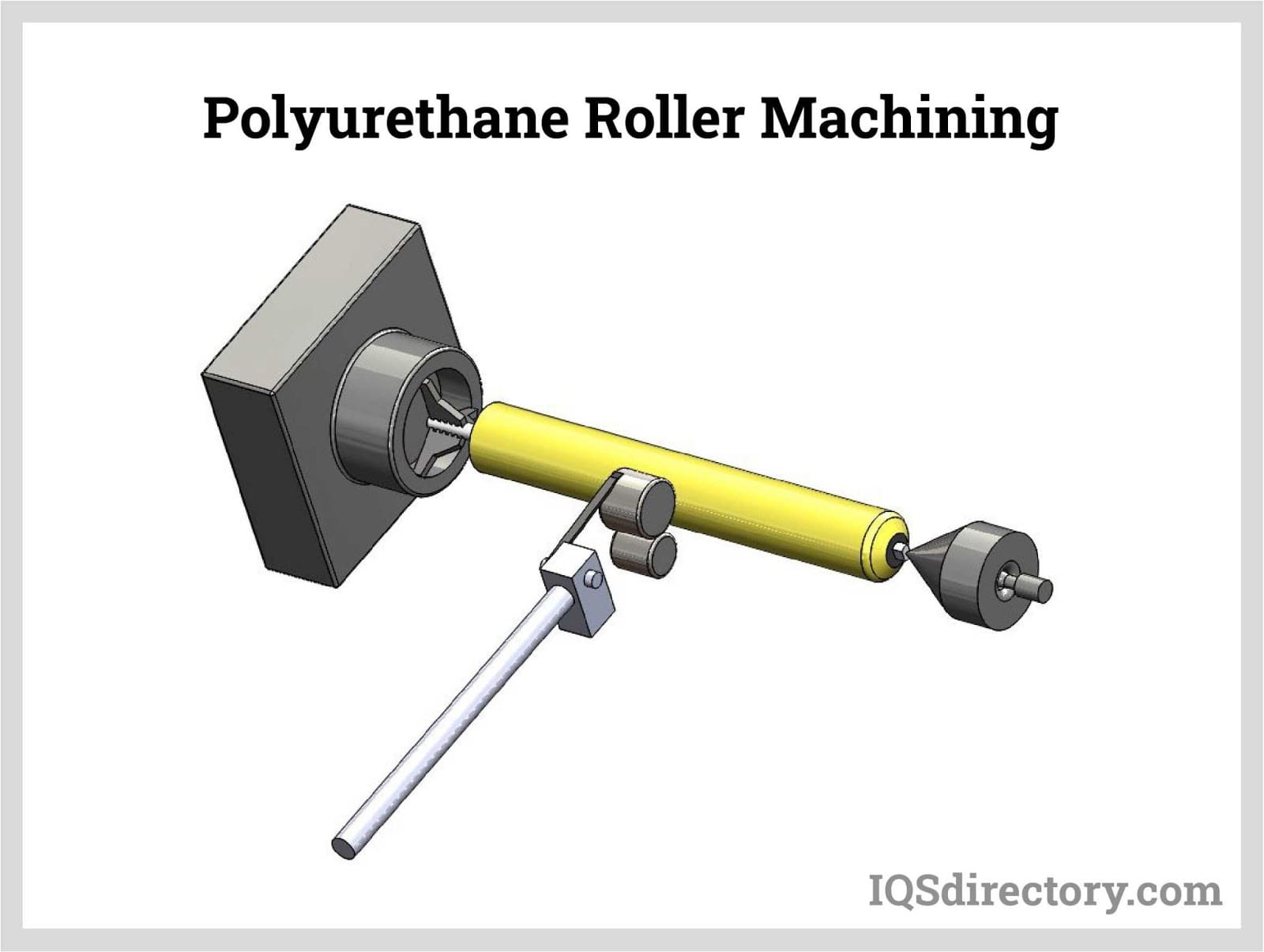
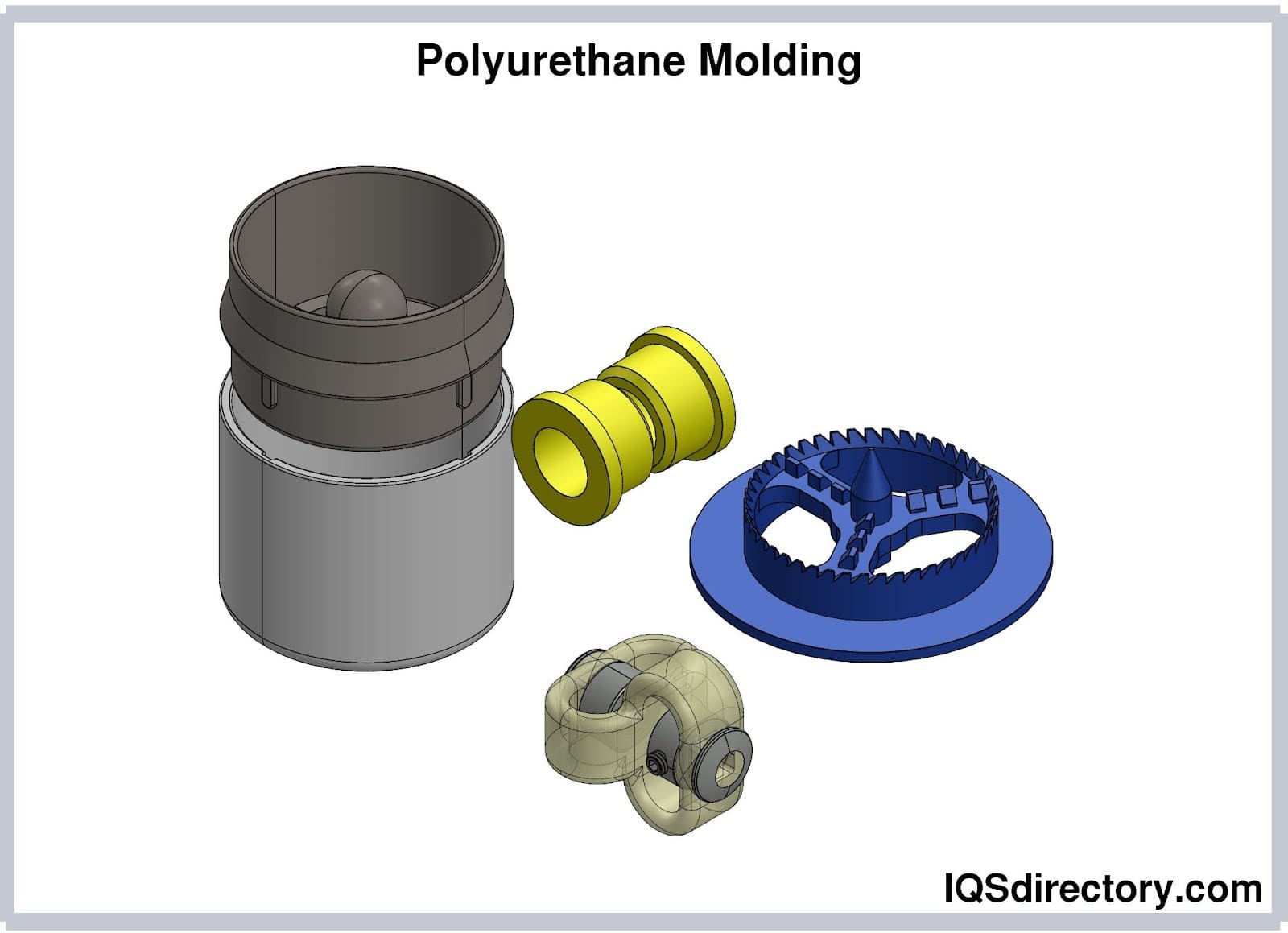
Rubber rollers are typically crafted through casting or molding (compression and injection molding), though extrusion remains viable for certain configurations. For rollers with metallic cores, the core is first shaped using metal casting or stamping techniques. A bonding agent—often a polymer-solvent blend—adheres the rubber to the core, followed by primer and top coats customized for chemical or mechanical resilience.
Compression and injection molding are preferred for solid rollers, enabling precise control over roller hardness and elasticity. For hollow rollers, extrusion with a central pin creates a durable tube ideal for lightweight or specialty applications.
- Grooving
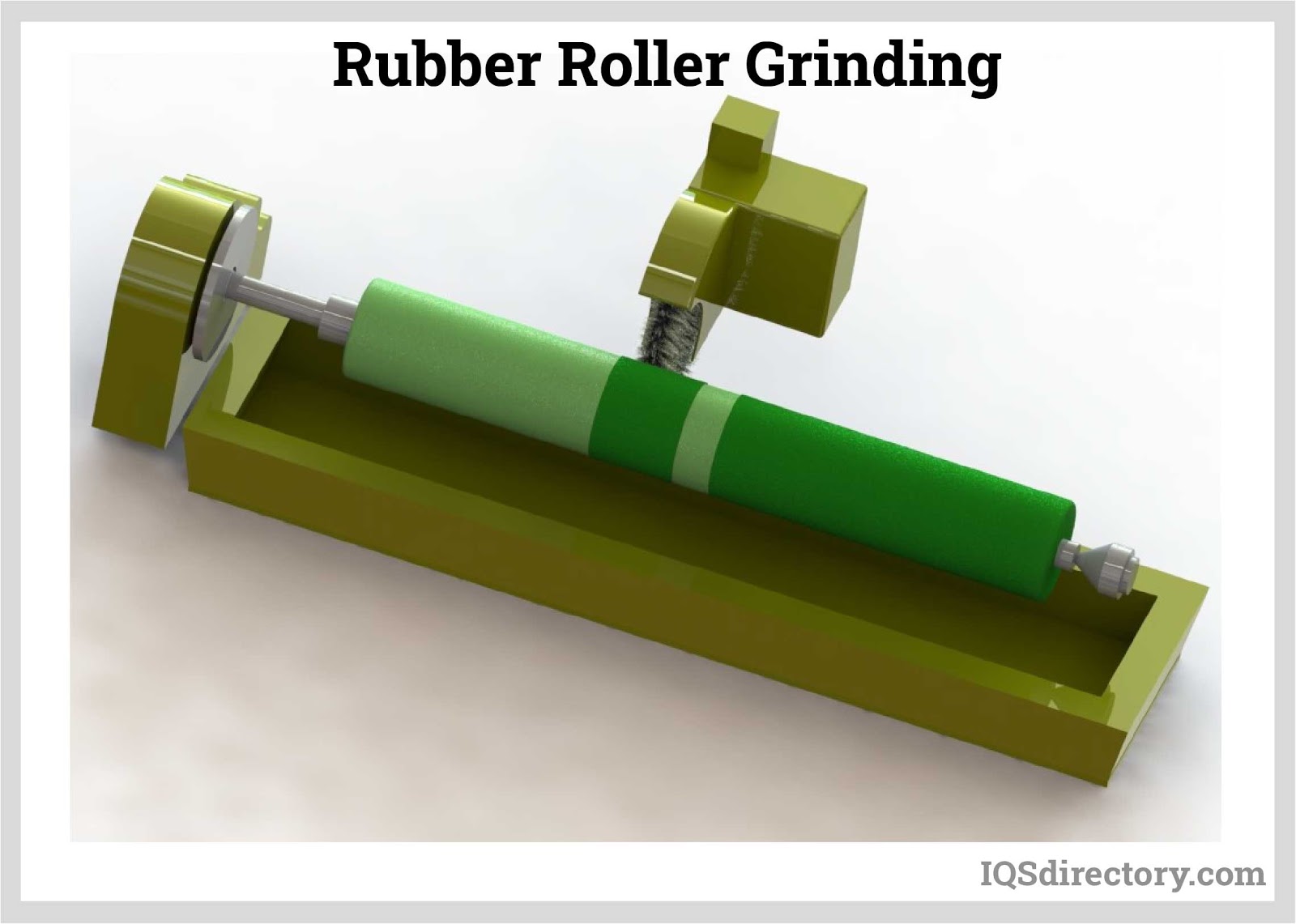
Surface grooving is the next step, imparting functional patterns onto the roller. Groove shapes may include squares, trapezoids, “V” shapes, double-edge saw patterns, half circles, and rounds, while orientations can be vertical, horizontal, helical, worm-like, diamond-cut, or screw-threaded. These grooves optimize roller performance for specific applications, such as web spreading, material alignment, or anti-slip control in conveyors.
- Inspection
Thorough inspection is conducted to identify any abnormalities, ensuring the finished rollers meet stringent quality standards for dimensions, surface finish, hardness, and concentricity. Non-destructive testing and visual checks are common practices to verify product integrity before shipment.
Materials
Manufacturers can select from a diverse range of elastomeric materials, each offering unique strengths and weaknesses. Common choices include:
- EPDM (Ethylene Propylene Diene Monomer): Excellent weather, heat, and ozone resistance, ideal for outdoor or high-temperature environments.
- Silicone: High thermal stability, chemical inertness, and flexibility, making it suitable for food processing, medical, and high-temperature applications.
- Nitrile (NBR): Superior oil and fuel resistance, widely used in automotive and industrial machinery.
- Neoprene: Good balance of chemical, oil, and weather resistance, suitable for printing and general industrial use.
- Polyurethane: Exceptional abrasion resistance, high load capacity, and resilience—ideal for heavy-duty and high-speed applications.
- Natural rubber: High tensile strength, flexibility, and low-temperature performance, often used for general-purpose rollers.
Metal cores are typically made from steel, stainless steel, or aluminum, chosen for their strength, durability, and resistance to corrosion or wear in challenging environments.
Considerations and Customization
Designing a rubber roller for a specific application involves several decision factors:
- Chemical resistance — Required for exposure to inks, solvents, oils, or food products.
- Load capacity — Determined by roller hardness, core strength, and intended operational speed.
- Dimensions — Custom diameters, lengths, thicknesses, and tapers are available to fit unique machinery or process requirements.
- Surface finish — Options include smooth, grooved, textured, or coated surfaces for specialized functions like anti-slip or enhanced ink transfer.
- Temperature range — Rollers can be engineered for high-heat or cryogenic environments.
- Roller speed — For high-speed applications, water-cooled cores may be recommended to dissipate heat (hysteresis heat) and maintain structural integrity.
Manufacturers offer extensive customization, from specialty rubber formulations and engineered finishes to proprietary coatings and unique roller geometries. For optimal results, discuss your precise performance goals and environmental conditions with your supplier to ensure a tailored solution.
A Note on Load Capacity
Standard rubber rollers can handle a maximum load of 100 kilogram-force per centimeter (kgf/cm) under linear force. However, true load capacity depends on the specific rubber compound, roller design, operational speed, and environmental conditions. When evaluating a rubber roller for your application, confirm its load rating with the manufacturer and request custom-engineered solutions for heavy-duty or high-speed processes. Manufacturers can provide rollers with load capacities exceeding 100 kgf/cm upon request.
Features
Rubber rollers possess several shared characteristics that enhance their efficacy across diverse applications. Chief among these is their outer rubber covering, crucial for direct interaction with processed or conveyed materials. Crafted from premium rubber compounds tailored to specific application needs, this outer layer varies in properties such as hardness, elasticity, chemical resistance, and temperature tolerance. Integral to their function, the rubber outer covering facilitates optimal traction and grip, crucial for preventing slippage and ensuring seamless material transfer processes.
The metal core serves as a crucial component, imparting structural support and stability to the rubber roll. Typically crafted from robust materials such as steel or aluminum, it ensures resilience and endurance against operational strains. Its design can vary based on the specific application, encompassing differences in diameter, thickness, and internal configuration.
Moreover, numerous adaptations and personalized configurations of these attributes are available to meet specific requirements. Various sectors and uses may demand bespoke rubber formulations for their exteriors, designed to manage distinct materials or conditions. For example, within the printing sector, roller exteriors are often engineered to ensure optimal ink transfer and withstand chemical wear from printing inks. Conversely, in the paper industry, rubber rolls might feature softer exteriors to prevent harm to delicate paper during processing.
The metal core can also undergo modifications tailored to specific needs. In heavy-duty applications, a strengthened metal core might be employed to manage increased loads and prevent deformation. Additionally, specialized coatings can sometimes be applied to the metal core to improve corrosion resistance or minimize friction with the rubber outer covering.
Rubber rollers excel across diverse industrial settings due to their unique combination of a rubber outer covering and a metal core. This design enhances traction, durability, and reliability, crucial for various applications. Customizable features further bolster their versatility, allowing rubber rolls to meet specific industrial demands with precision.
Types
When selecting the right rubber roller for your application, it’s essential to understand the main types and their respective use cases. Below is an overview of the most common varieties:
- Printing rollers (ink rollers): Distribute ink onto paper and various surfaces. Available as internally ink-fed rollers or with engraved patterns for precise ink transfer. Common in offset, gravure, and flexographic presses.
- Laminating rollers: Made from heat-resistant materials such as silicone rubber, these rollers withstand temperatures up to 500°F and are used to bond layers of materials, from ID cards to large-format films.
- Drive rollers: Power material movement, often used in converters and web handling machines, with integral shafts and keyways acting as gears.
- Guide rollers (idler rollers): Offer support and guidance to roller systems such as conveyors without actively driving movement.
- Grooved rollers: Feature spiral, U, or V-shaped grooves to optimize grip or facilitate web spreading in belt-driven conveyor systems.
- Conveyor rollers: Specialized for effortless movement of goods and materials in automated or manual conveyor lines.
- Live shaft rollers: Designed for challenging environments and heavy loads, featuring external bearings that allow both the shaft and roller to rotate together.
- Dead shaft rollers: Incorporate internal bearings and revolve around a stationary shaft for applications requiring precise alignment.
- Cleaning rollers: Custom-designed to remove dust, debris, and contaminants from surfaces in electronics, printing, or converting industries.
- Spreader rollers: Feature specialized groove patterns (herringbone, spiral, circumferential, lateral-fluted) to stretch and evenly distribute web materials, preventing wrinkles and improving product quality.
- Stinger rollers: Similar in configuration to dead shaft rollers but specifically engineered for marine and offshore applications.
- Urethane rollers: Made from polyurethane, these rollers boast exceptional shock resistance, moldability, and durability. Applications include packaging, data storage, material handling, printing, and office equipment.
- EPDM rollers: Offer heat, corrosion, and weather resistance, well-suited for outdoor or high-temperature conditions, though less compatible with petroleum-based products.
- Industrial rubber rollers: Encompass all types used in manufacturing machines like stamping presses, bending machines, and high-speed conveyors, engineered for reliability and precision under demanding conditions.
Advantages of Rubber Rollers
Rubber rollers offer numerous advantages over metal rollers, making them the preferred choice in a wide range of industrial and commercial applications:
- Superior traction and grip: The rubber covering provides enhanced grip on processed materials, reducing slippage and improving control in high-speed or precision applications.
- Shock absorption and vibration dampening: Rubber’s natural elasticity absorbs impact and vibration, protecting delicate machinery and reducing wear on both the roller and the materials handled.
- Non-marring surface: Unlike metals, rubber rollers will not scratch or mark sensitive substrates such as textiles, films, or high-gloss paper.
- Noise reduction: Rubber rollers operate more quietly than their metal counterparts, creating safer and more comfortable work environments.
- Chemical resistance: Specialized rubber compounds can withstand exposure to solvents, oils, acids, and other harsh chemicals, extending roller lifespan in demanding environments.
- Customization options: Rubber rollers can be engineered with varied hardness, elasticity, coatings, and surface finishes to suit unique requirements, from anti-static properties to FDA-compliant food processing.
- Lower maintenance costs: Their resilience and durability reduce downtime and minimize the need for frequent replacement, leading to lower long-term operational costs.
These advantages have made rubber rollers indispensable in industries such as printing, packaging, food processing, textiles, paper manufacturing, electronics, automotive production, and logistics.
Proper Care for Rubber Rollers
To maximize the operational lifespan and performance of your rubber rollers, follow these best practices:
Temperature Regulation
High temperatures can degrade rubber compounds and adhesives, regardless of the formulation. To prevent premature failure and ensure roller longevity, avoid rapid heating during use. If your application requires high-temperature operation, consider water-cooled roller cores and select rubber materials rated for elevated temperatures.
Storage
Proper storage is essential for preserving roller integrity. Always store rubber rollers upright by their shafts and avoid contact with foreign materials that could deform or contaminate the rubber surface. Keep rollers in a cool, dark, and dry environment to protect against UV light and ozone degradation. For long-term storage, wrap rollers in protective covers.
Maintenance Checks
Routine inspection is vital. Regularly check ball bearings, axles, and gears for signs of wear, misalignment, or overload. Inspect for unbalanced or deflected rollers, which can cause uneven wear and reduce process efficiency. Replace worn components promptly to avoid costly downtime.
Standards
Rubber rollers must adhere to a range of industry standards and quality certifications. For example:
- ISO standards — Most rubber rollers used in machinery (including extruders and printing presses) comply with international ISO requirements for quality, safety, and performance.
- ASTM International — Rubber rollers are graded according to ASTM’s hardness scale and other technical benchmarks to ensure suitability for specific applications.
- FDA compliance — For food-grade rollers, compliance with FDA standards is mandatory for safe processing of consumables.
- RoHS & REACH — Environmental and safety compliance for rollers used in electronics or export markets.
Verifying these certifications with your supplier is crucial to ensure safety, regulatory compliance, and reliable performance in your intended application.
Things to Consider
Choosing the right rubber roller manufacturer is a key step in ensuring the success of your project. The quality, performance, and reliability of your rollers depend on the expertise and capabilities of your supplier. Here’s how to get started:
- Prepare a detailed list of specifications, including material requirements, load capacity, temperature range, chemical exposure, dimensions, and surface finish.
- Consider your budget, delivery timeline, after-sales support, and any specific regulatory or industry standards.
- Research reputable manufacturers with a proven track record in your application area. Explore our curated list of leading rubber roller manufacturers for top-rated suppliers.
- Contact three or four suppliers for quotes and technical discussions. Ask about customization, quality control, and previous project experience relevant to your needs.
- Compare proposals, focusing on value, warranty, and support as well as price.
By carefully evaluating your options and engaging with experienced suppliers, you can ensure your rubber rollers deliver the performance, durability, and value you need. Have questions about sourcing or specifying rubber rollers? Contact our team for personalized advice.
As you peruse the companies listed, consistently cross-check your specifications for compatibility. Select three or four suppliers you wish to contact directly, and reach out to each for a quote. Once you’ve had these conversations, compare and contrast the suppliers. Decide on the company you trust to provide the utmost integrity and deliver superior products. Best of luck!
What are rubber rollers used for?
Rubber rollers are used in a wide variety of industries such as printing, conveyor systems, laminating and coating, textile manufacturing, calendering in the paper industry, industrial machinery, print finishing equipment, embossing and engraving, and automotive manufacturing. They provide functions like ink transfer, material transport, bonding, protection of delicate materials, and more due to their versatile, shock-absorbing, and non-marring properties.
How did rubber rollers originate and evolve?
Rubber rollers were developed after the invention of vulcanized rubber by Charles Goodyear in 1840. Before this, rollers were made from wood or metal, which lacked flexibility and resistance. The adoption of rubber in rollers allowed for new applications due to added elasticity, weather, and chemical resistance. Over time, improvements in materials and design, including the use of different rubber compounds and metal cores, have further evolved their functionality for specific environments and industries.
What materials are commonly used to make rubber rollers?
Rubber rollers are often made from elastomeric materials such as EPDM, silicone, nitrile (NBR), neoprene, polyurethane, and natural rubber. The core is typically made of metals like steel, stainless steel, or aluminum. Each material is selected based on application-specific requirements including chemical resistance, load capacity, temperature, and durability.
What types of rubber rollers exist for industrial applications?
Industrial rubber rollers include printing rollers, laminating rollers, drive rollers, guide rollers (idler rollers), grooved rollers, conveyor rollers, live shaft rollers, dead shaft rollers, cleaning rollers, spreader rollers, stinger rollers, urethane rollers, EPDM rollers, and general industrial rubber rollers. Each type serves unique functions such as conveying, guiding, spreading, inking, or providing traction and specific resistance properties.
What are the main advantages of using rubber rollers?
The main advantages of rubber rollers include superior traction and grip, shock absorption, vibration dampening, a non-marring surface, noise reduction, chemical resistance, customization options, and lower maintenance costs. These benefits make rubber rollers essential in industries such as printing, packaging, food processing, textiles, paper manufacturing, and more.
How should rubber rollers be cared for to ensure their longevity?
Proper care for rubber rollers involves regulating operating temperatures, storing them upright in cool, dry, and dark environments, and conducting regular maintenance checks on ball bearings, axles, and gears. Routine inspection helps detect wear or misalignment early, and prompt replacement of worn or damaged parts can prevent costly downtime and maintain roller performance.
What standards and certifications should rubber rollers meet?
Rubber rollers should comply with industry standards such as ISO for quality and safety, ASTM for technical specifications like hardness, FDA for food-grade rollers, and RoHS & REACH for environmental and safety compliance. Verifying these certifications with suppliers ensures rollers are suitable and safe for their intended applications.
How can I choose the right rubber roller manufacturer?
To choose the right rubber roller manufacturer, prepare a detailed list of specifications, consider budget and timelines, research reputable suppliers, request quotes from multiple sources, and compare their offerings in terms of quality, warranty, support, and experience. Ensuring the manufacturer meets all relevant standards and can customize products to your needs is essential for long-term success.